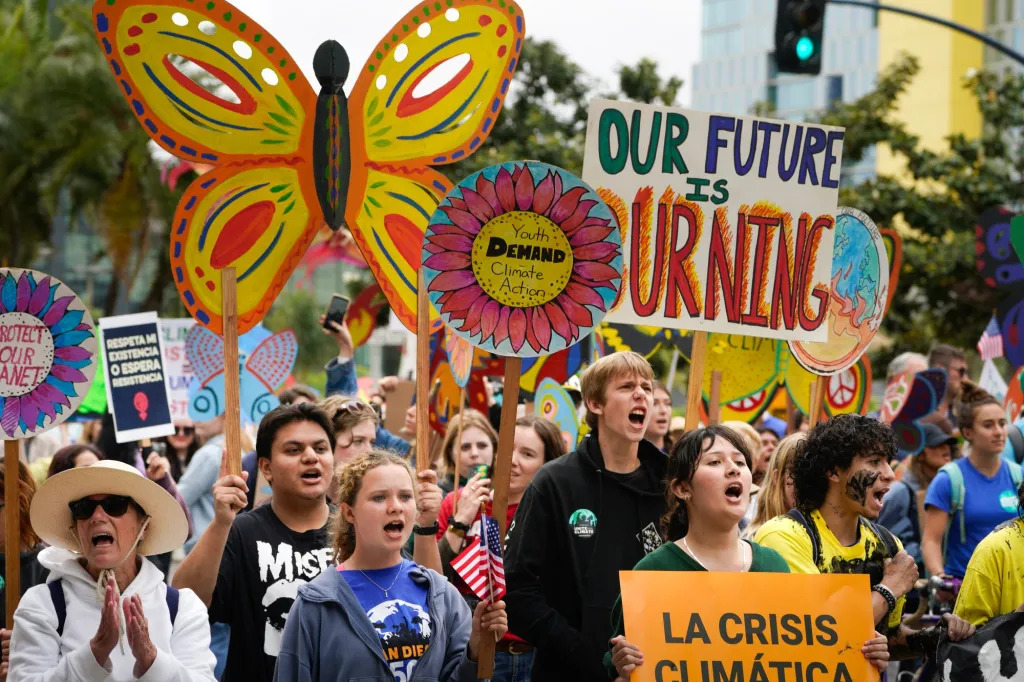
Photo by Nelvin C. Cepeda | San Diego Tribune (article)
As federal rollbacks threaten environmental justice and California prepares to implement its largest-ever climate bond, philanthropy has a critical opportunity — and responsibility — to act boldly.
At a recent SoCal Grantmakers Environmental Funders Grantmakers Convening, funders gathered to discuss two urgent fronts: defending federal environmental investments and ensuring equitable implementation of California’s $10 billion climate bond, Proposition 4. Here’s what emerged — and how philanthropy can step up.
Key Highlights
- Federal Funding Cuts Are Harming Vulnerable Communities
Recent clawbacks of EPA environmental justice grants — many already in motion — have left frontline communities in legal and financial limbo. Grantees, who rely on these funds through reimbursement-based structures, are facing halted projects and institutional chaos. Michelle Roose from the Environmental Protection Network and Jillian Blanchard from Lawyers for Good Government shared details of their Federal Fund Protection Program, which provides vital pro bono defense and compliance support, including a class action lawsuit to reinstate suspended grants. - There’s Legal Momentum
Despite setbacks, advocates have won over 135 lawsuits defending EJ principles, with courts increasingly siding with communities. The Green & Healthy Homes Initiative is a standout example, winning a summary judgment that reinstated funding. This legal momentum offers real hope — but funders must step in to keep the fight going. - Prop 4 is a Generational Investment Opportunity
Sara Aminzadeh from the California Natural Resources Agency (CNRA) noted the climate bond (Prop 4) allocates 40% of its funds to disadvantaged communities, supporting projects like wildfire resilience, clean drinking water and green infrastructure. The CNRA is working to streamline grant access, and a key need is community-based technical assistance — meeting groups where they are, not where we assume they’ll be.
Recommendations for Funders
Show Up for Legal Defense
Support legal partners defending community groups in court and providing technical assistance to help grantees stay compliant. Fund initiatives like the Fund Protection Program.
Invest in Local Power and Organizing
Fund the organizing — not just the outcome. Programs like EJ Ready, which Angelo Logan from the Liberty Hill Foundation shared about, are helping communities not only access public dollars but also practice democracy under attack. Expand regional “protect and defend” funds, particularly in high-need areas like the Inland Empire and Southern California.
Build Capacity for Climate Bond Access
Support cohorts of grassroots groups in applying for Prop 4 funds. Funders can co-develop “on-ramp” strategies with state agencies to ensure local leaders aren’t left behind. Think: pre-application coaching, flexible matching funds and localized technical assistance hubs.
Be in Community, Not Just in Contact
Echoed throughout the convening: “Being in community means showing up.” This means deeper listening, relationship-building and funding healing-centered spaces that sustain the people doing the work — not just the work itself.
Act Boldly, Now
This is not the moment for hesitation. As one panelist reminded us, “Clarity comes from action.” Communities are stepping up in the face of disaster, disenfranchisement and disinvestment. Funders must do the same.
The stakes are high, but so is the opportunity. Philanthropy can help defend federal investments, unlock state climate dollars and stand in solidarity with the communities most affected by environmental injustice. It’s time to move from analysis to action.