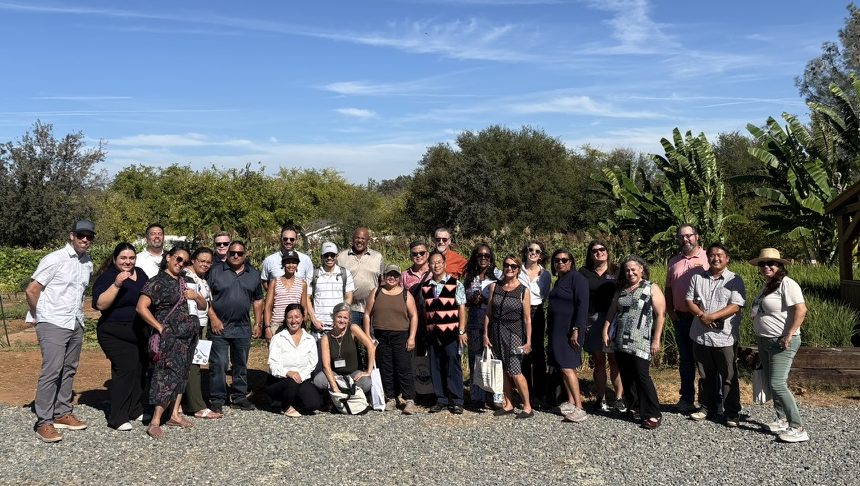
The last thing I expected to be talking about on a funders’ tour of the North State was what leadership has in common with fishing nets.
But there we were. It was well over 100 degrees outside in Oroville, but inside, we were cool and comfortable as Jovanni Tricerri of LEAD Butte County recalled visiting Ecuador, where his father grew up. He remembered watching fishermen sit together for hours, repairing holes in their nets.
“I think of our work together as mending nets,” Tricerri told the community leaders and funders gathered in the room. “It’s not ‘How do we get ahead?’ It’s ‘Where are the gaps? Where can we knit things together?’ If we don’t fix the net, it’s children, families, and our communities that slip through the cracks.”
By then, we’d spent half the day seeing both the ingenuity holding North State communities together and the gaps leaving them vulnerable—from a small farmer growing an abundance of food without cold storage to a farmworker community isolated from essential services.
We learned about other gaps, too. In Humboldt County, nearly one in four residents uses CalFresh to help pay for groceries—one of the highest rates in the state. Looming federal cuts to food assistance and health care will almost certainly deepen that hardship. And when a worker is cheated out of wages or an immigrant needs legal help, there may be few places nearby to turn. Lake County, for example, is one of California’s rural “legal deserts.”
A Shared Vision Across 19 Counties
Closing gaps like these is the work of the North State Inclusive Economic Development Collective. Its 12 member organizations—including the UC Davis Labor and Community Center, which produced the CalFresh research—represent Tribal, Hmong, Black, Latino, agricultural, faith-based and other communities across a vast swath of rural Northern California, from Humboldt’s redwood coast to Butte’s foothills and beyond. As we described in an earlier post, the Collective grew out of the Community Economic Mobilization Initiative, or CEMI, a capacity-building and grantmaking initiative led by Sierra Health Foundation.
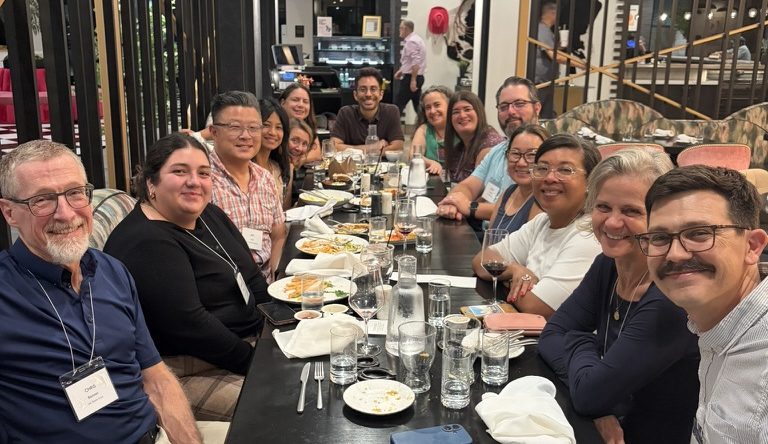
The North State Funders’ Tour brought additional funders into that conversation. Co-sponsored by the Collective, CEMI and The Funders Network’s Smart Growth California, it kicked off with framing by Chris Benner, a UC Santa Cruz professor focused on regional labor markets and economic opportunity, and Manuel Pastor, a USC professor and director of its Equity Research Institute. Together, they wrote Solidarity Economics: Why Mutuality and Movements Matter.
‘Our Economy, Not The Economy’
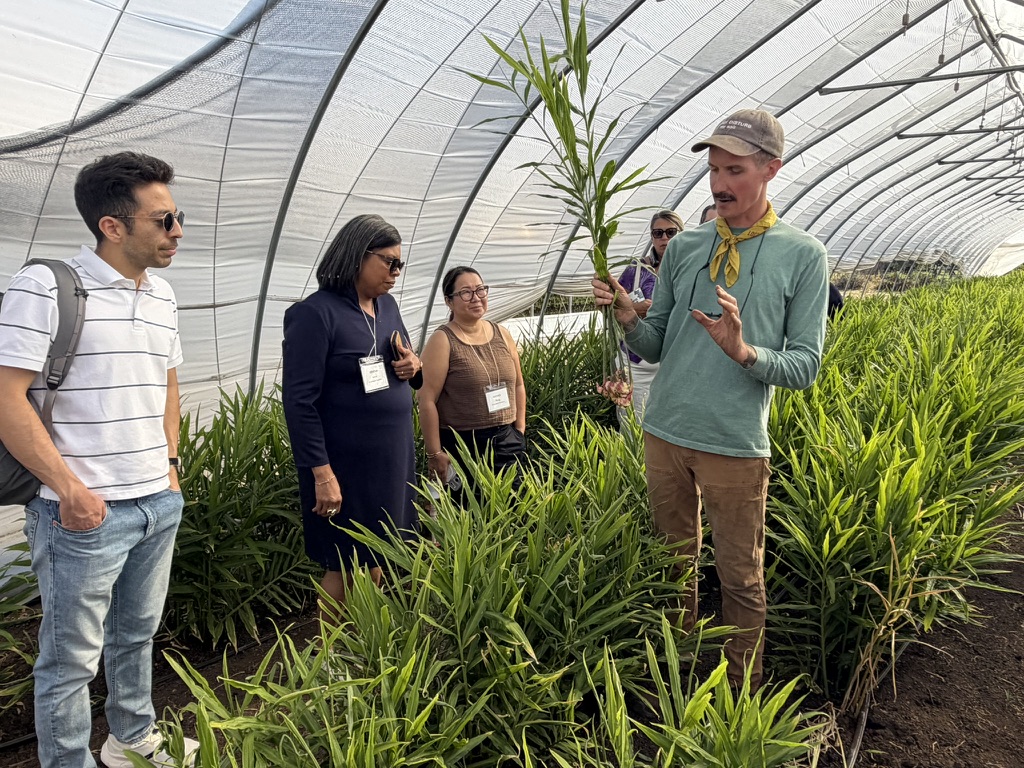
Speaking directly to the North State community leaders, Benner explained how economic growth has become increasingly disconnected from the lives of working people. His basic message: If it feels like things have gotten harder, it’s not just you.
For decades, more of the gains from growth have flowed to capital and top earners, while wages for most workers have lagged. He pointed to the example of college: A degree still provides a substantial wage advantage over a high school diploma, but tuition has risen dramatically, while the wages of college-educated workers have not kept pace. The strain isn’t only about the price of getting ahead, but about whether people get ahead at all. Roughly 90 percent of children born in 1940 grew up to have higher household incomes than their parents did at the same age. For children born in the 1980s, that figure had fallen to about 50 percent—a flip of the coin. Researchers found that most of the decline was driven not by slower economic growth, but by how unevenly that growth was shared.
Benner and Pastor reminded North State leaders that the economy isn’t a force of nature. People created its rules, and people can change them. It depends on cooperation as much as competition—and it can work differently when more people have a say.
What Access Makes Possible
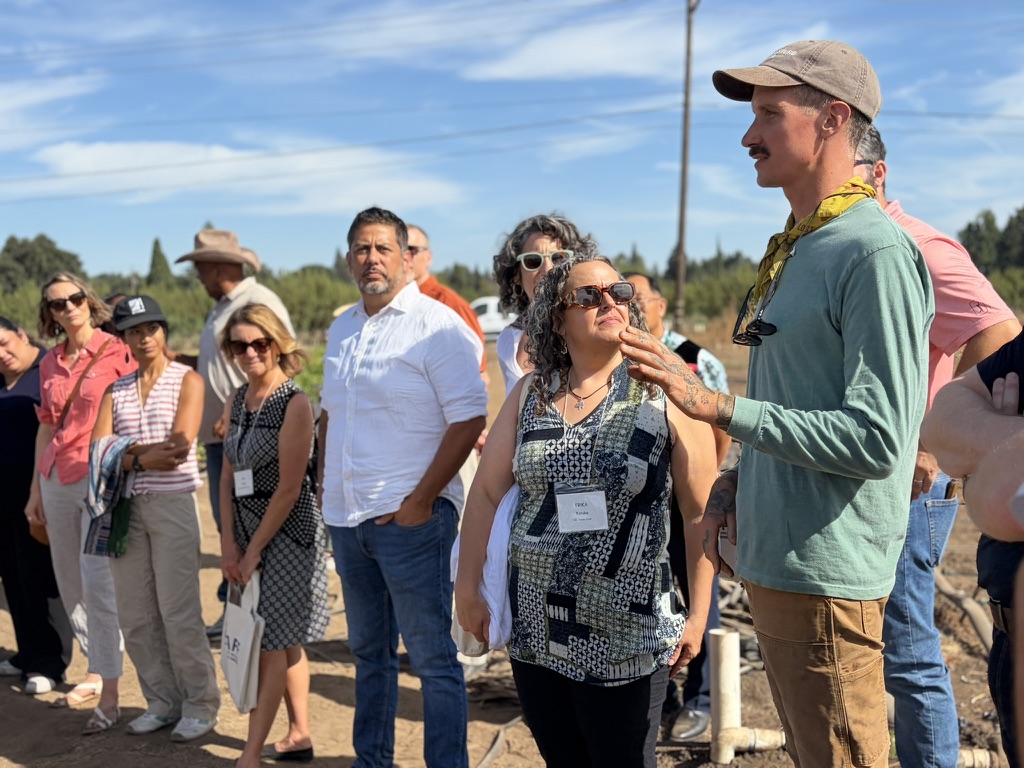
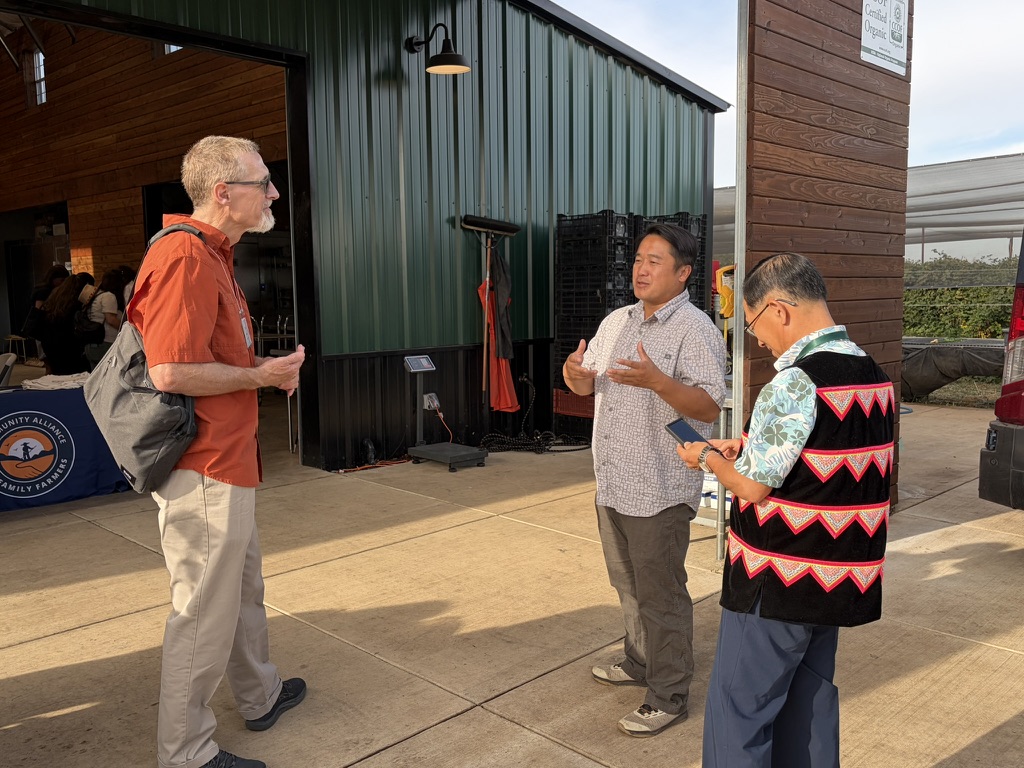
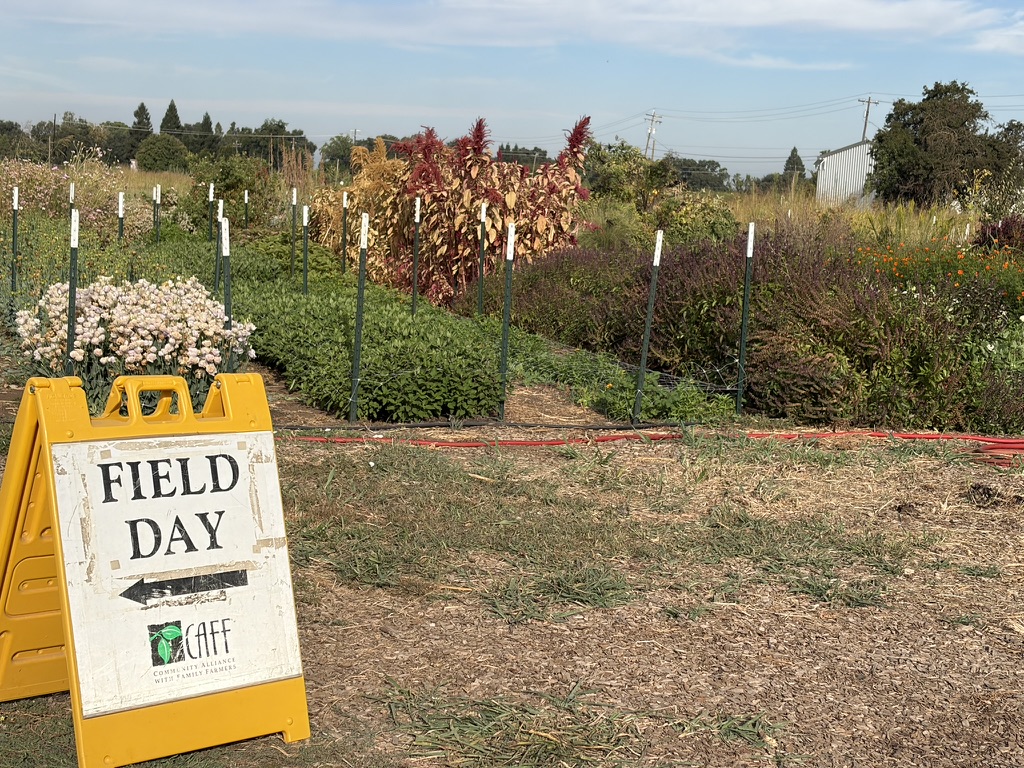
At Burns Blossom Farm in Chico, Kyle Burns described the passion, and constant uncertainty, involved in running a small farm. “Every year, we almost go out of business,” he told us. A $50,000 organic-transition grant helped the farm purchase equipment, improve its soil and adapt to climate extremes. Recently, Kyle and his wife purchased the land they farm. “Being able to own land as a farmer is life-changing.”
Next door, Hmong farmer Ha Lee Moua leases the land he farms. Without the security of ownership, it is difficult to justify investing in permanent improvements such as refrigeration or an on-site washing station. His produce must be picked and shipped almost immediately. Steven Dambeck, a local food aggregator on the site visit, explained how transformative even one shared cold-storage unit could be. The contrast between two skilled, hardworking farmers made clear how access to land, infrastructure and capital can shape entirely different futures.
 Dreaming Beyond Survival
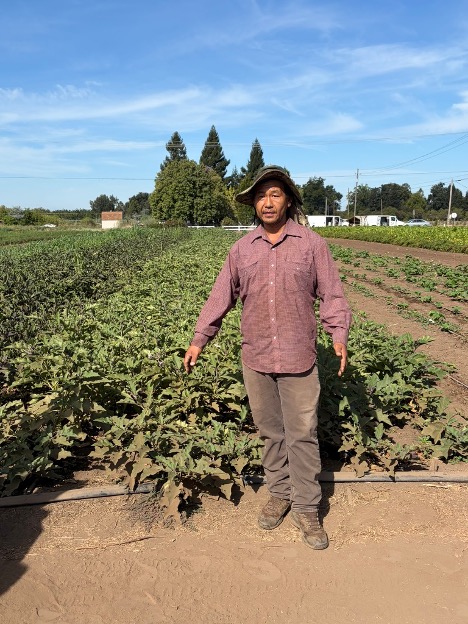
In Gridley, Norma Lacy of Northern Valley Catholic Social Service welcomed us to a farmworker-housing community where her organization has worked for two decades. Transportation and basic services remain persistent barriers.
“Gridley is like the moon,” she told us. “Everyone knows where it is, but it takes NASA to get here.”
For Lacy, the work is personal. Her mother labored in the fields around Fresno, and she grew up relying on the kinds of programs she now helps administer. “When I was young, trauma was making choices for me,” she said. “Now I work the programs that used to sustain me. That is economic sustainability.”
But Lacy also pushed back against seeing Gridley only through what it lacks. “We are rich in resilience, rich in family—but we need some basic things,” she said, gesturing toward a dusty soccer field where children once played.
The Collective is giving leaders space to imagine what those “basic things” could make possible. “Through the Collective, we’re dreaming bigger,” Lacy said. “We don’t want to be in a survival state.”
Land Back, Cultures Preserved
For Lindsay Bellows of HUṠWEJ, land return is not an abstract idea. In 2024, HUṠWEJ and the Nevada City Rancheria Nisenan Tribe raised more than $2.5 million through 3,600 donations to return ancestral land to Tribal stewardship—the Tribe’s first land base since its federal recognition was terminated in 1964. The land is now home to six Tribal families, with plans for additional housing.
Bellows said the Collective is helping organizations whose work has long been pushed to the margins find one another. “We might never have met if it weren’t for CEMI,” she said. “There’s so much we can do now to shine a light on the interconnectedness of our struggles and the opportunities we face.”
At the Hmong Cultural Center of Butte County, elders are working to pass farming traditions to younger generations. Hmong people make up most of the county’s Asian-identifying population, and many trace their roots to Laos. Elder Seng S. Yang, who came to the United States from Thailand as a teenager, spoke about the history behind the Hmong community’s presence in the region. During the Vietnam War, the United States recruited Hmong soldiers to fight communist forces in what became known as the “Secret War” in Laos. After the communist takeover in 1975, many faced persecution and fled to refugee camps in Thailand before eventually resettling in the United States.
“We are not here because we want to be,” he said. “We had to escape.”
Our final stop felt like a respite. Inside the Black Resiliency Project’s welcoming space, incense filled the air, colorful art covered the walls, and books and conversation invited people to linger. As co-founder Rachel Morton put it, “I want my community to be able to dream in color.”

Continuing the Conversation
The Collective connects organizations that might otherwise remain separated by distance, culture and the daily demands of under-resourced work. But collaboration takes time, staff and sustained investment.
“All of our work is in addition to,” said Erika Katske, lead technical-assistance provider for the Collective. “Everyone is overbooked. The Collective is where we come together to think bigger-picture about what our future can look like.”
We’ll debrief the tour and consider what its lessons mean for rural philanthropy at our next Rural Funders’ Working Group meeting on September 29, from 1:00–2:30 p.m. PT. We’ll ask: Where are the gaps? What relationships need to be knitted together? And how can this group be most useful to funders working across rural California?
For details or to join the meeting, contact diana@fundersnetwork.org