 The San Joaquin Valley stretches like a spine down the middle of California. Along the way are tiny places like Cantua Creek, tucked into a vast grid of irrigated farmland growing almonds, pistachios, tomatoes, and melons. There are hubs like Stockton, perched on the Delta where inland rivers meet, and Fresno, producing more fruits and vegetables than some entire states. Further south near Taft, the product is oil, alongside growing numbers of big-box warehouses and distribution centers fueled by e-commerce.
UC Merced Chancellor Juan Sánchez Muñoz set the tone, drawing on his journey as the son of a Delano fieldworker who rose to lead a university recently recognized as one of the country’s leading institutions for social mobility.
As he welcomed the crowd, Sánchez Muñoz said differing ideas are healthy: “You make us a better place by being here and by not always being cooperative. We want to instill in our students critical skills—not skills of acquiescence—skills that bring up ideas and imagine solutions that make the future a more just, environmentally sustainable, thoughtful, and hopeful space.”
He emphasized the importance of moving from ideas to action, returning to a lesson from his father: “ ‘Ideas están bien, pero lo que cuenta es el trabajo, los hechos. ¿Cómo lo hacemos?’ —ideas are okay, but it’s the work, the deeds that matter. How do we do it?”
What’s Working on the Ground
At tables across the room, people picked up on that spirit, sharing what’s already underway throughout the Valley. In conversations with participants from Bakersfield, West Fresno, and Arvin, the focus was on EV infrastructure and Fresno’s Measure C; at another table, I sat with a Lawrence Livermore Laboratory hydrologist, a Mariposa city planner, and the leader of an agricultural innovation nonprofit, unpacking the California Fifth Climate Change Assessment—produced every five years to compile region-specific data on how climate change is unfolding across the state. This edition, for the first time, analyzes climate displacement and migration. A statewide convening focused on the Assessment will take place October 20–22, 2026 in Sacramento, offering an opportunity to explore how these findings can inform action.
The Stanislaus Sustainable Communities Coalition, for example, presented on their work to broaden community input into the City of Modesto’s General Plan. Martha Armas-Kelly, a coalition leader, walked through lessons learned, underscoring the importance of preparing community members to engage meaningfully.
“You need to have a pre-game,” she said. “Don’t send your community members into meetings with a script. We ignore community members when we do that. Teach them so their own voices are heard.”
Engaging Communities in New Ways
Laura Ramos of the California Water Institute highlighted creative community engagement tools like “Recharge Lotería,” a bingo-style game that helps explain groundwater recharge, subsidence, and other complex water issues. Other examples showed how simple ideas can draw people in, including a “water in your world” photo contest using QR codes to make participation easy.
She also encouraged a shift in perspective, seeing opportunity in extremes like heavy rain and floods. Groundwater, she noted, doesn’t follow jurisdictional lines, and the region could do a better job storing water in one place and recharging it in another. That kind of approach depends on stronger coordination. During the 2023 floods in the Merced region, communities received conflicting information across jurisdictions instead of clear, consistent guidance. As Ramos put it, “It’s not if ’23 will happen again. It’s when.”
Moving Forward
What made the convening different was who was in the room and how they were talking to each other. People with very different vantage points had space to ask what’s working, what’s not, and what needs to change.
For those of us in philanthropy, it’s a reminder to stay flexible, listen closely, and focus not just on supporting good ideas, but on creating the conditions for better ones to emerge and take hold.
That means taking time to understand the region and staying connected to each other. The San Joaquin Valley Funders Collaborative supports that work, bringing funders together to learn, hear directly from communities, and align where support can make the most difference.
Diana Williams leads the San Joaquin Valley Funders’ Collaborative for Smart Growth California, an initiative of TFN. If you’re interested in joining the San Joaquin Valley Funders’ Collaborative, email Diana —we meet regularly to share ideas and turn them into action.

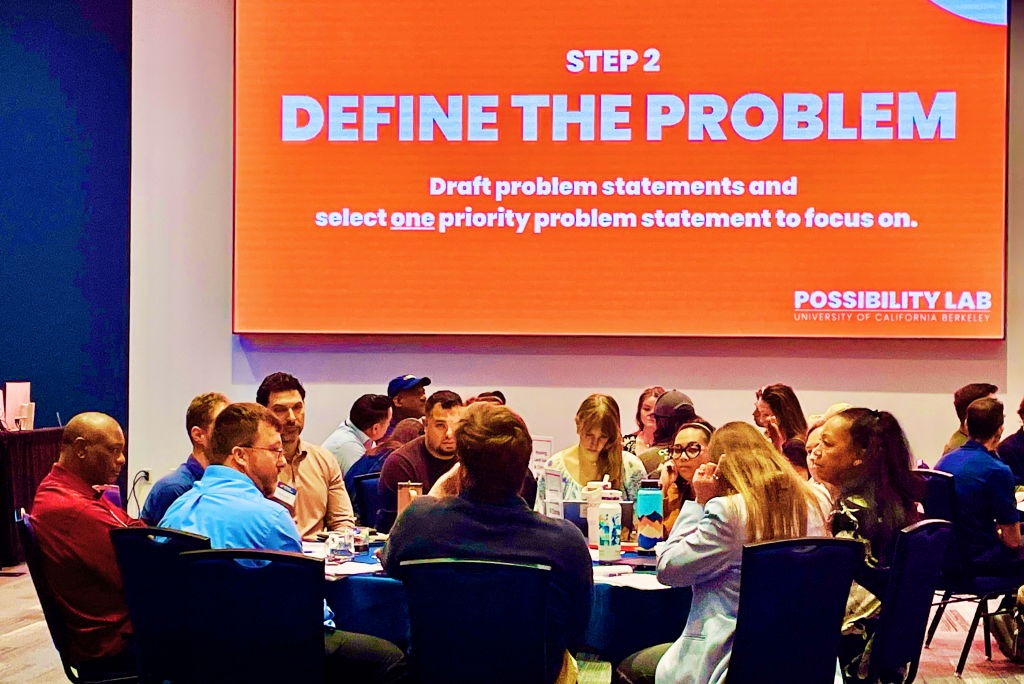
A mix of local, regional and state advocates met with leaders from across the Valley to dive into 13 topic areas